


With the rise in the popularity of electric cars in America, many new electric vehicle owners encounter a significant dilemma: Level 1 vs Level 2 Charging-what is the better choice to use in everyday life? The two offer varying speeds, comfort levels, and prices, and the appropriate option will be determined by the way of life, the number of miles covered daily, and the arrangement at home. Being a guide to the actual differences between the Level 1 vs Level 2 Charging in the USA, this guide will help you make the necessary choice regarding the type of charging that will best suit your needs in the most practical, simplistic, and human way to do it.
The Reality of Level 1 and Level 2 Charging as an EV Owner
In order to comprehend Level 1 vs Level 2 Charging, one should know what each of the choices implies. Level 1 charging utilizes a standard household connector, the one that is used by small appliances. It provides a simple and consistent charge, which is a simple yet efficient solution. Level 2 charging refers to 240 volt connection and is much faster to charge. In the USA, a lot of EV owners upgrade to Level 2 to have convenience on a daily basis. In the comparison between Level 1 and Level 2 Charging, consider the amount of time you spend on the road and the speed at which you want your battery recharged every day.
Speed of Charging: The largest difference between Level 1 and Level 2 Charging
Speed is the key determinant in the Level 1 vs Level 2 Charging. Level 1 chargers are estimated to increase range by 3-5 miles an hour. This is perfect in the short-trip or overnight charger. Level 2 chargers on the other hand contribute between 20-40 miles of range per hour. It implies that even a half-empty battery will have a full charge overnight. To a large number of U.S drivers, the difference between Level 2 and Level 1 Charging is the cause of their home upgrading to Level 2.
Installation Requirements Level 1 vs Level 2 Charging
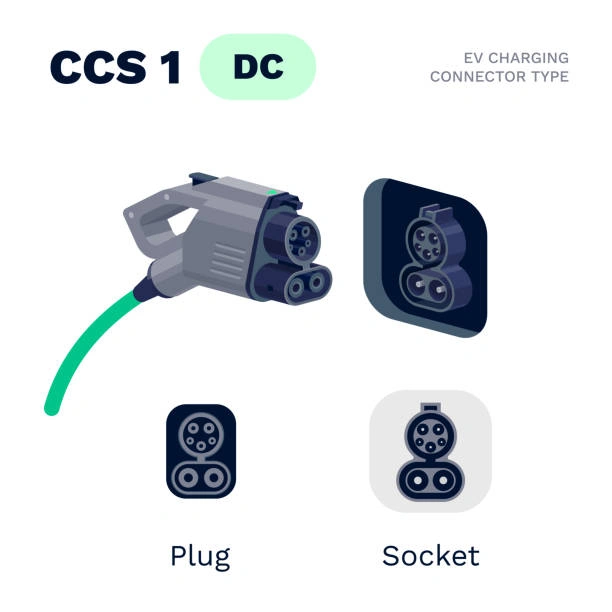
The installation procedure of every charging option is quite different. The differences between Level 1 vs Level 2 Charging installation are influenced by the following:
- Level 1 has a standard 120-volt outlet.
- Level 2 needs a 240-volt circuit
- Level 2 can be a professional electrician.
- There are homesteads that require electrical panel replenishment.
- Prices are determined by the distance of wiring and labour.
- Outdoors installations require equipment that is weather proof.
These arguments explain the difference between Level 1 vs Level 2 Charging, in terms of its installation and price.
Differences in Costs between Level 1 and Level 2 Charging in the USA
The other significant distinction between Level 1 and Level 2 Charging is the price. Level 1 is virtually free since all you need is the outlet that you already possess at home. Level 2 chargers, in their turn, also need a charger and installation. A basic Level 2 installation runs between 900 and 2000 dollars depending on your electricity. Although Level 2 incurs an initial expense, it is daily convenience that many EV owners consider worth the expense. In the course of time, Level 2 became a widespread preference as compared to Level 1 vs Level 2 Charging in the USA due to the enhanced speed and reliability.
What is the Best Alternative to Your Life? The Difference between Level 1 and Level 2 Charging
Driving behavior has a significant influence in the determination of Level 1 vs Level 2 Charging. Take into account the following lifestyle factors:
- Daily commute distance.
- Do you take long drives regularly?
- Overnight parking location.
- Time available for charging.
- Battery size of your EV.
- Home electrical capacity.
Such rudimentary lifestyle factors tend to drive the ultimate conclusion as to the Level 1 vs Level 2 Charging of American drivers.
Which Is the Best Choice in Long-term EV Ownership?
Long-term considerations Level 1 or Level 2 Charging Level 2 is usually a better option in the USA when it comes to the vast majority of households. It is faster and has a shorter range anxiety as well as larger EV batteries. Level 1 charging continues to be ideal to drivers with low mileage or small plug-in hybrids. Still, the convenience of Level 2 is becoming more attractive as EV technology advances and batteries become larger. There is a high count of EV owners who eventually move to Level 2 as it will suit the long-term requirements in comparison to Level 1 vs Level 2 Charging.
Conclusion
Level 1 vs Level 2 Charging depends on how you drive, how you are set up at home or in your daily routine. Level 1 is suitable in terms of both short distances and simple requirements, whereas Level 2 is much faster, more adaptable, and convenient in long-term aspects. However, both alternatives facilitate a sound ownership of EV in the USA, yet the correct one hinges on what simplifies your daily routine. Whichever one you choose, Level 1 vs Level 2 Charging will make you maximize your electric car.
